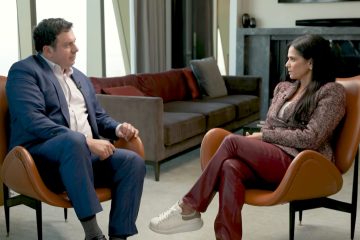
In the current business environment of constant uncertainty — from tariff demands to geopolitical threats — finding a strategy to navigate crises is more valuable than ever.
Executives across a range of industries — from companies including Uber, YouTube, General Motors and Airbnb — have faced their share of unique tests and, in some cases, turned around their companies. They shared their lessons learned with CNBC for the new prime-time series “Leaders Playbook,” premiering Wednesday at 10 p.m. ET.
From Ted Sarandos at Netflix to Mary Barra at GM and Dara Khosrowshahi at Uber, each executive offers a case study in managing people, driving change and unlocking opportunity even in unexpected situations.
Here’s how eight top corporate leaders navigated change to reinvent their companies.
1. Ted Sarandos, Netflix co-CEO
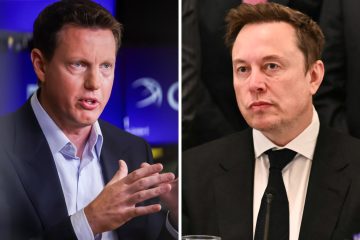
For Netflix co-CEO Ted Sarandos and Chief Content Officer Bela Bajaria, the biggest challenge came when film and TV studios pulled back on the content they licensed to the streaming service. In response, Sarandos made a big bet to move into original content.
“We were kind of at an inflection point in the business. It was actually probably an existential decision,” Sarandos said of his decision to greenlight a $100 million investment in “House of Cards.”
“I worried if we started small that we would never really get a good enough read if we made a good choice or not, because it would have so little impact on the business,” he said.
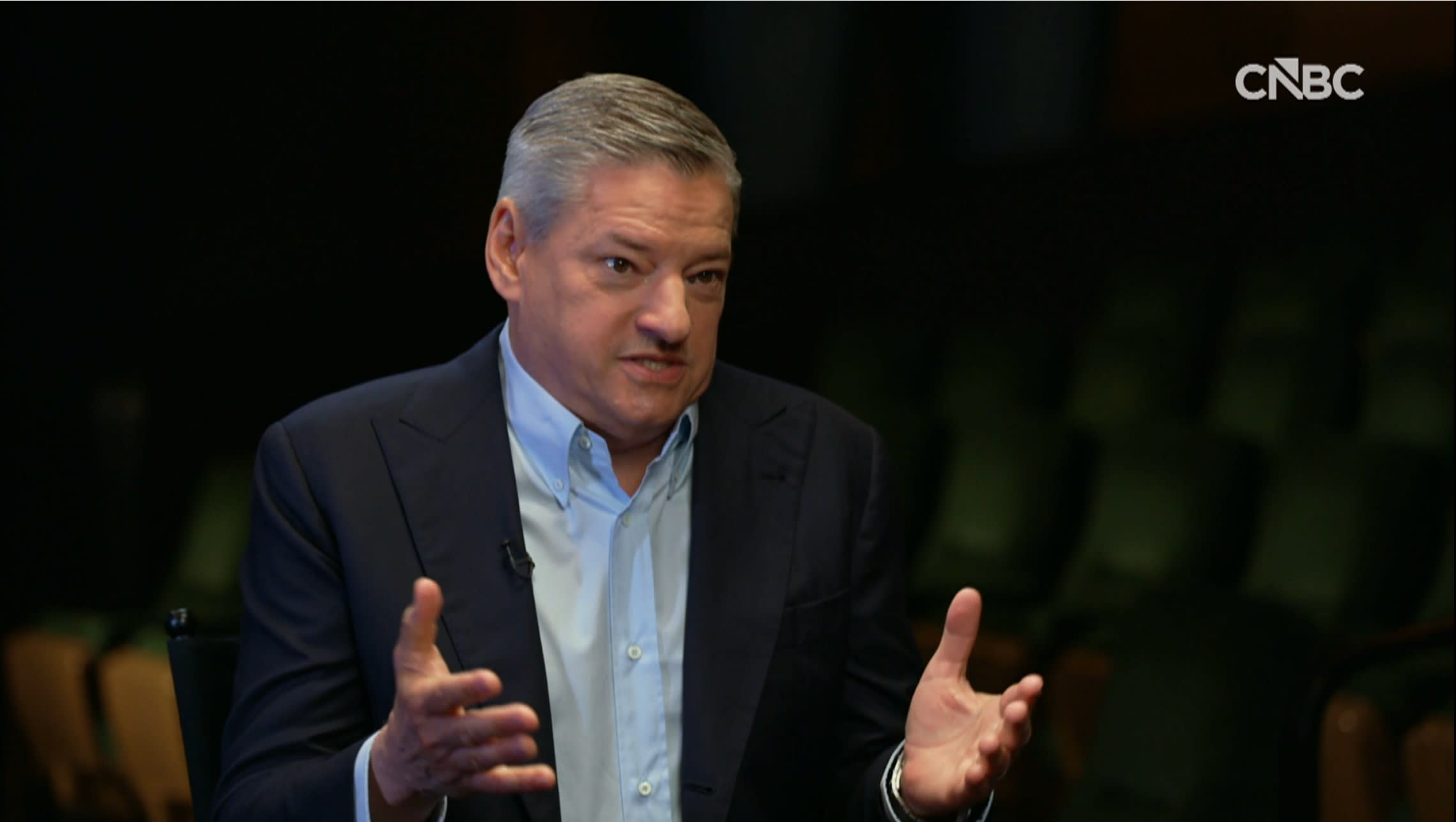
Now Sarandos is making an even bigger swing, with Netflix’s plan to buy Warner Bros. Discovery’s studio and streaming business in a $72 billion deal. It would be Netflix’s first major acquisition, but it isn’t the first time Netflix has made a big shift. In recent years the streamer has pivoted to embrace ads, live content and some sports.
“Things change,” Sarandos said in an interview before the WBD deal was announced. “Either the conditions change or your insights change.”
Sarandos said he leads with an approach of “never say never” to foster experimentation.
“It’s farming for dissent, which is part of the original culture that is alive and well at Netflix,” he said. “Meaning you have to create an environment where people can say, ‘There are no sacred cows here,’ and that, ‘I know how you feel about this, Ted, but how about this?'”
2. Danny Meyer, Shake Shack founder
For restaurateur Danny Meyer, the Covid pandemic posed an existential threat to his commitment to always put employees first.
In March 2020, after Meyer was forced to lay off 95% of his employees across the company, he responded by creating a fund to help his staff cover urgent expenses and establishing a system to help them find jobs at companies such as Whole Foods.
The crisis forced him to abandon his vision of eliminating tipping at his high-end restaurants and replacing it with higher prices to more equitably pay kitchen staff higher salaries. Meyer said he realized that to achieve his mission of putting employees first, he had to shift strategy.
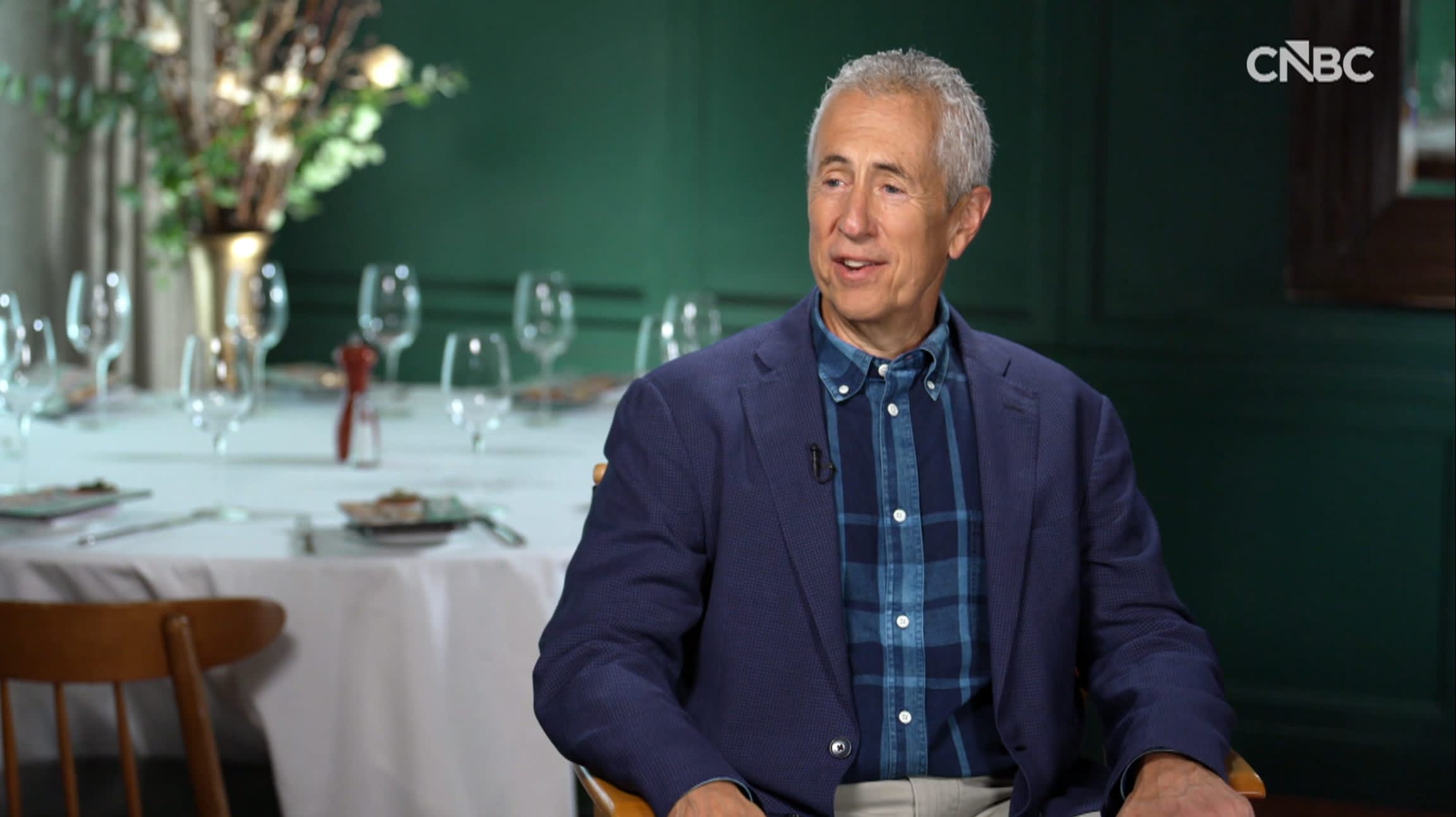
“After two weeks of telling our staff, ‘Wait, you can’t accept tips,’ I said, ‘Danny, you’re not being on their side.’ So we brought back tipping,” Meyer said. “In addition to bringing back tipping, we instituted a new policy where we pay a percentage of sales to all of our kitchen workers and all of our non-tip eligible workers, so that they too have an incentive on a busy night.”
Now as Meyer and Shake Shack CEO Rob Lynch tackle the challenge of scaling the burger chain, they’re focused on keeping employees at the center while operating at a massive scale.
“The folks who have been here for a long time, who have built this place and are amazing, have to believe that big isn’t bad,” Meyer said.
3. Mary Barra, General Motors CEO
Mary Barra was named CEO of GM just a few years after its restructuring and bankruptcy.
Then, just as she was focusing on rebuilding, she inherited a crisis. Faulty ignition switches in the Chevy Cobalt and other vehicles led to at least 54 frontal impact crashes involving the deaths of more than a dozen people.
Barra, just two weeks into being named CEO, started “peeling the onion back,” as she told CNBC, to understand how things had gone so wrong. The process, she said, helped establish a priority around safety and communication.
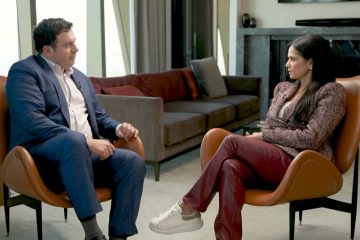
General Motors CEO Mary Barra and CNBC Senior Media & Tech Correspondent Julia Boorstin tour a factory in Flint, Michigan, for CNBC Leaders Playbook, a new primetime series on leadership. Series premiere January 7 at 10 p.m. ET/PT on CNBC.
CNBC
“Very early on we said, ‘We’re going to be transparent. We’re going to do everything we can to support the customer. And we’re going to do everything in our power to make sure we never let this happen again,'” Barra said.
Now, Barra said, she fosters an environment that encourages workers to nip issues in the bud.
“I’ll ask employees, I’ll say, ‘When’s the best time to solve a problem?’ They’ll kind of look at me and go, ‘The minute you know you have one,'” Barra said.
4. Dara Khosrowshahi, Uber CEO
Uber CEO Dara Khosrowshahi inherited a company struggling with serious and very public trust issues.
His predecessor, Uber co-founder Travis Kalanick, was investigated following allegations of a toxic work culture, and the company faced the threat of a boycott amid concerns about inadequate background checks and sexual misconduct.
“Gaining back trust is really difficult,” Khosrowshahi said. “One of the most important moments when I came to Uber was when we have these all-hands meetings. One of the employees asked me about our PR problem, the trust problem. … And I say, you know what? If we treat it as a ‘PR problem,’ we’re never going to solve it. The problem is us. The way to win trust back is act differently.”
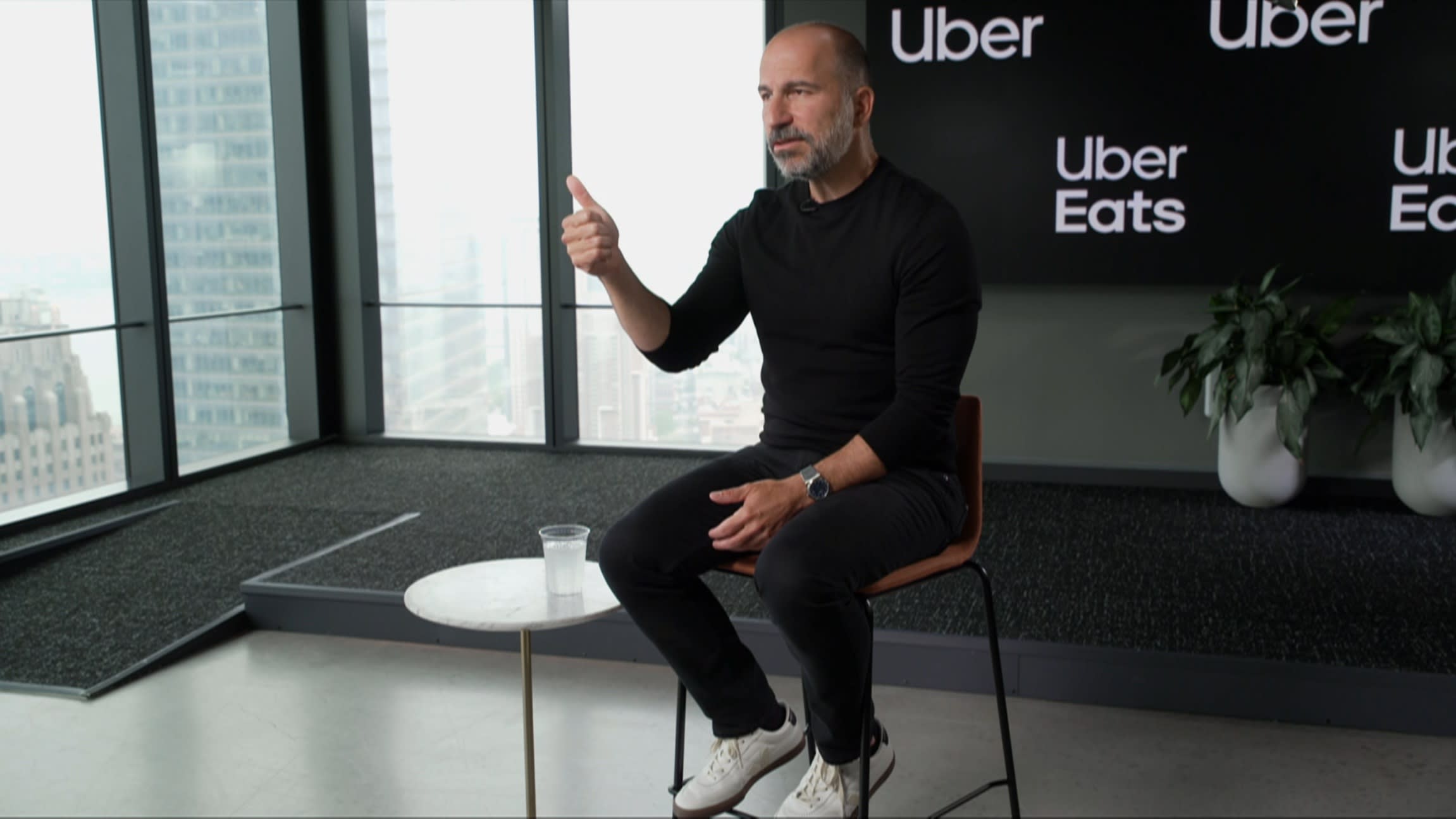
The fact that Uber had undeniable problems, Khosrowshahi said, actually presented an opportunity to drive lasting change.
“If I’d taken over and everything was going great, the question would be, why are you trying to change something that is perfect,” he said. “The fact is that we were in a crisis moment. We had a change in leadership, so I had the right to come in as the new leader and change where we wanted to change, but also keep consistent that entrepreneurial spirit, the great talent that we had at the company, really combining the two.”
5. Neal Mohan, YouTube CEO
YouTube CEO Neal Mohan’s crisis came in 2017.
Some of the world’s largest brands pulled their advertising spending from the platform following reports that ads were appearing next to controversial and extremist content. The boycott was projected to cost YouTube $750 million in lost revenue that year if it continued.
“This was an existential crisis for YouTube,” Mohan said. He led the charge to hire thousands of human reviewers to make important judgment calls and also to invest in technology to detect harmful content at scale before it spreads.
This experience, before he took the helm as CEO, helped Mohan establish what he calls his core North Star principle: “We stand for freedom of expression but that doesn’t mean that sort of anything goes. We’ve always had rules of the road, which are called our community guidelines. And I would argue that those two competing principles of free expression, rules of the road, actually end up being self-reinforcing.”
6. Brian Chesky, Airbnb founder and CEO
Airbnb founder and CEO Brian Chesky also suffered a crisis of confidence in his company around trust and safety when in 2011 a woman’s Airbnb-listed apartment was trashed.
“Everyone was outraged,” Chesky said. “There was a hashtag on Twitter trending, ‘RIP Airbnb.’ People thought this was the demise of the company. And that moment, I think, was our moment of truth. We stood up, and I wrote an open letter to the community. I apologized to the woman who this happened to. We took a lot of responsibility, but we also came up with what was at the time a $50,000 guarantee against property damage. That is now a $3 million guarantee against property damage for anything that incurs during your stay.”
Chesky said the experience helped him realize what it means to be a leader.
“A leader steps up in times of crisis; they’re decisive,” Chesky said. “You have to have the courage to make a defining decision that’s going to chart your way forward.”
7. Barry Diller, IAC and Expedia chairman and senior executive
Barry Diller faced a career-defining threat in the tragedy of 9/11.
The terrorist attack struck just as he was working on a deal to acquire 75% of Expedia for about $1 billion. Diller said he debated internally about what to do; many advocated that the company back off from doing the deal as the attack brought travel to a screeching halt and eliminated virtually all revenue for Expedia.
At the height of the argument, Diller said, he recalls hearing someone say, “If there’s life, there’s travel.”
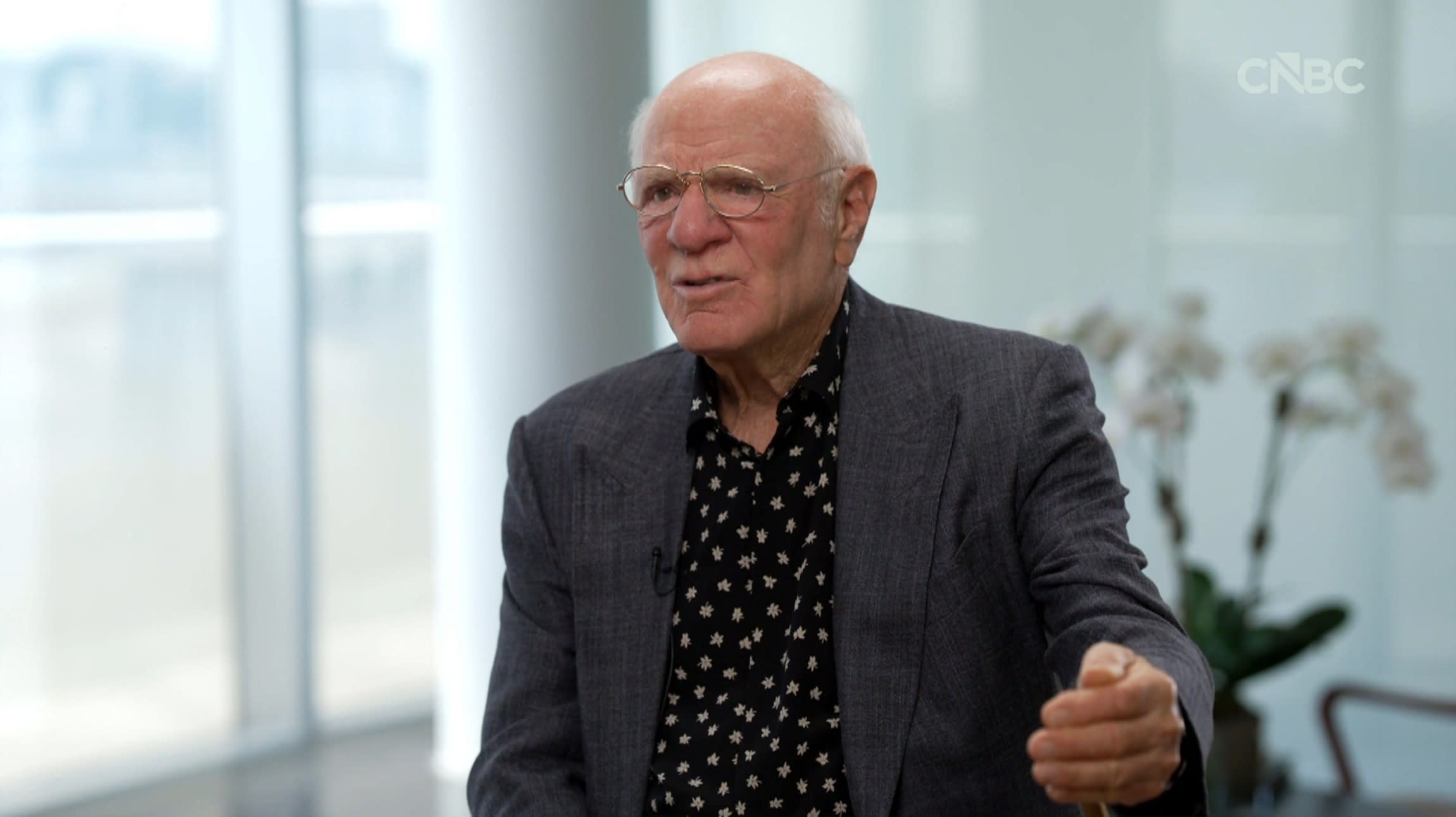
“As soon as I heard it, I said, ‘Close. I’m betting on that.’ If there isn’t life, then who cares anyway?” Diller told CNBC.
He stayed the course and ultimately consolidated Expedia, Hotels.com, Hotwire, TripAdvisor and other travel brands under IAC, where he grew them and in 2005 spun them off as the publicly traded Expedia.
Diller said that as a leader he embraces “creative conflict.”
“Hearing as many disparate voices, hopefully all argued passionately. That cauldron if you make it last long enough … that brew makes the decision,” Diller said.
8. Marvin Ellison, Lowe’s CEO
Lowe’s CEO Marvin Ellison earned a reputation as a turnaround expert thanks to his success managing crises at retailer JCPenney before he took the top job at Lowe’s in 2018.
He started his tenure at the company focused on transforming its supply chain and resetting corporate culture to focus on employees. It was the investment in those two key parts of Lowe’s business — supply chain and employees — that Ellison says enabled the company to continue stocking stores and keep them open during the Covid pandemic.
“If we had not taken the steps to shore up our supply chain, to create a more stable digital infrastructure … and really invest in our associates,” Ellison said, “I can’t imagine what the time period would have been like for our company.”
The pandemic drove a surge in demand as Americans spent more time at home and sought to improve their spaces, forcing Lowe’s to evolve even faster.
“Demand was so high, both in store and online, and so we had to make some incredibly quick pivots. We didn’t even, at that time, have the ability to do curbside pickup, and so we had to build that real time,” Ellison said. “We just had this incredible acceleration on things that we had to do to serve the customer. What it taught me was, if there is an urgent need to help the customer, it’s amazing how quickly you can move.”
Tune in to CNBC’s “Leaders Playbook” — a new prime-time series exploring how the world’s top business leaders lead, make decisions and build lasting success. It premieres Wednesday, Jan. 7, at 10 p.m. ET/PT, with all-new episodes every Wednesday.