Key Points
- Thursday is the first round of the NFL Draft.
- CNBC Sport spoke with presumptive first pick Fernando Mendoza in an interview.
- Mendoza already has several endorsement deals, and has likely made several million dollars before signing his first professional contract because of NIL.
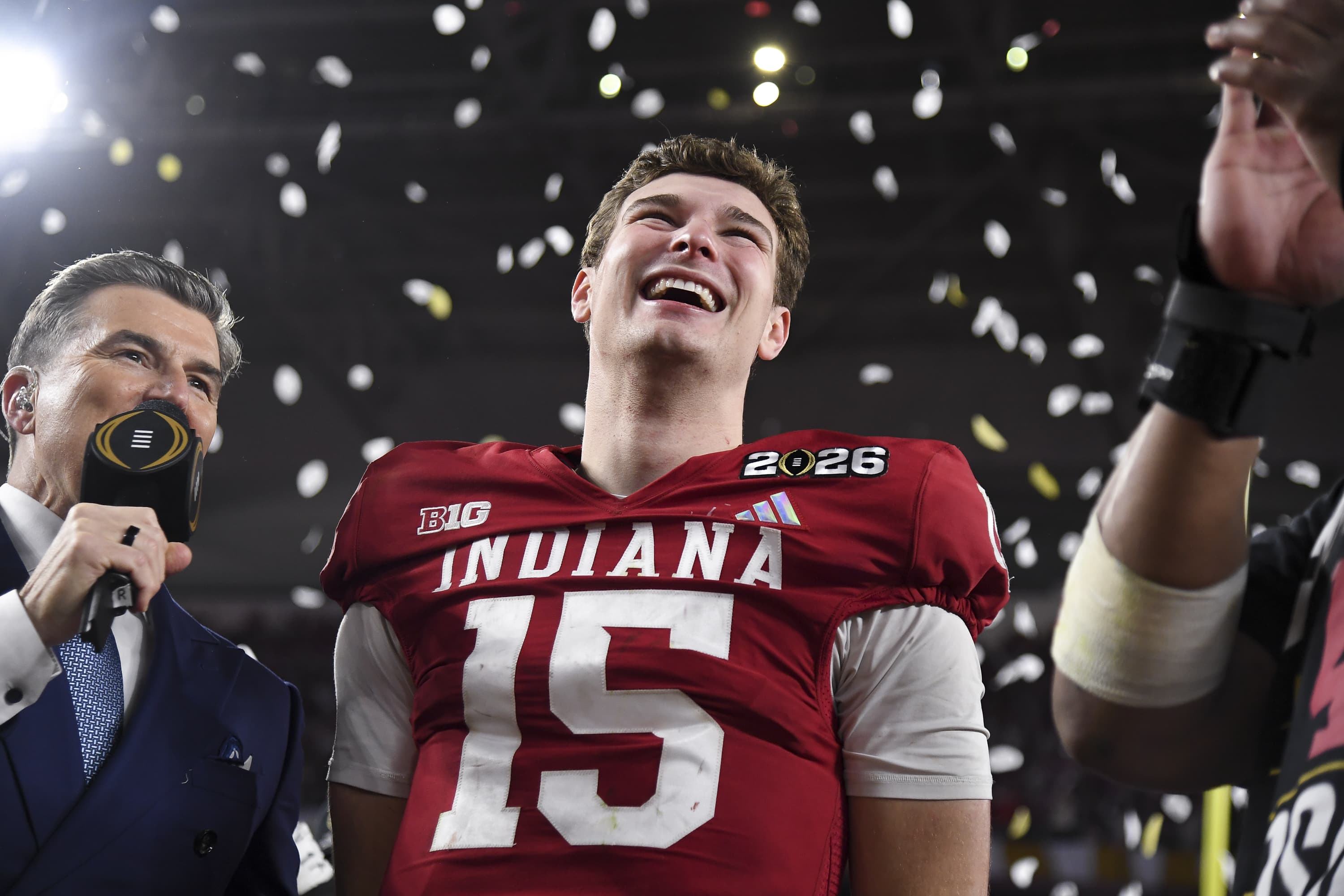
The NFL Draft’s first round is Thursday night. It will change every selected athlete’s life forever — just, not as much as it once did. For decades, the first round of the NFL Draft meant athletes could finally — literally — pay back their family members for all their hard work. The draft marked collegiate athletes turning professional, earning money for the first time. Twenty years ago, Mario Williams went first in the NFL Draft. He signed a six-year, $54 million contract with the Houston Texans, which included $26.5 million in guaranteed money. Fernando Mendoza will almost certainly be selected with the No. 1 pick on Thursday. He’ll sign a four-year guaranteed deal for about $55 million — terms dictated in 2011 when the league redid its rookie wage scale . The difference between Mendoza and Williams is that the former is almost certainly already a millionaire — even before that first NFL contract. That’s because Mendoza likely earned more than $1 million in NIL, or name, image and likeness, deals during his one season as Indiana’s starting quarterback, when he won the Heisman Trophy and the national championship. The NIL tracking site On3 valued Mendoza at $2.6 million for this past season, making him the fifth most valuable college football player and the seventh most valuable overall athlete in high school or college. “Although the rise of the spotlight has been fairly quick, I’ve always tried to keep my brand standpoint at the forefront,” Mendoza said this week in an CNBC Sport interview. Mendoza already has deals with both Adidas and Hugo Boss because the combination represents his brand. He told me he’ll even be wearing Boss clothing on draft night despite the fact he’s not going to Pittsburgh, where the event will take place. He’ll be chilling and watching from home with his family — in a Boss suit. “I can show that at the highest level, not only can I perform in the field, I can perform off the field in any situation, whether it’s a meeting, whether it’s a presentation, or whether it’s getting to meet some new great people,” Mendoza told me. “I believe that Boss represents that because the way that they have this style — it’s classy, it’s elegant. I believe it represents my brand and the brand I’m hoping to build in the future.” While Mendoza’s idiosyncratic personality is clearly part of what would lead a 22-year-old to say something like that, it’s also clear that NIL is changing the personalities of rookies in the NFL. For one thing, it’s increasing the age of first-year players. This is something San Francisco 49ers general manager John Lynch discussed this week in his predraft press conference. “You’re seeing a lot more 25-year-old rookies,” Lynch said . “It’s the opportunity for these guys to stay and make good money doing what they’re doing. I don’t have all the answers there, but I do believe it’s something as a league we have to pay a lot of attention to.” Lynch points out the NFL is now in competition with college rather than functioning as the promised land. The NFL is only starting to see the ramifications of this. Older rookies affect team-building strategies. A 25-year-old may be more likely to get injured because he has more wear and tear on his body during that first contract. NFL coaches may also be less able to mold a 25-year-old than a 21-year-old. That shift could be a boon for the business world: 25-year-olds are usually a lot more mature than 21-year-olds — something that brand-safe corporations relish.